Preply: Language lessons
- 4.7
- Rating
- 5.00M
- Installs
- Free
- Price

 Analysis by App-foxy
Learning a language is easy to start and surprisingly difficult to keep personal. I have used plenty of vocabulary apps that helped me remember words, but they rarely answered the question I actually had in the moment: how would a real person say this? Preply: Language lessons takes a different route by putting private tutoring at the center. Instead of treating conversation as a final reward, it makes one-to-one teaching the main experience.
That focus makes it a particularly interesting education app for anyone who has reached the limits of studying alone. The app is free to install, is suitable for Everyone, and comes from Preply Inc. It has built a strong audience, with over five million installs and a 4.8 average from around fifty-four thousand ratings. Those figures do not tell me whether every lesson will be a perfect match, but they do suggest that the private-tutor model has found a wide audience.
Private tutoring is the feature that changes the learning experience
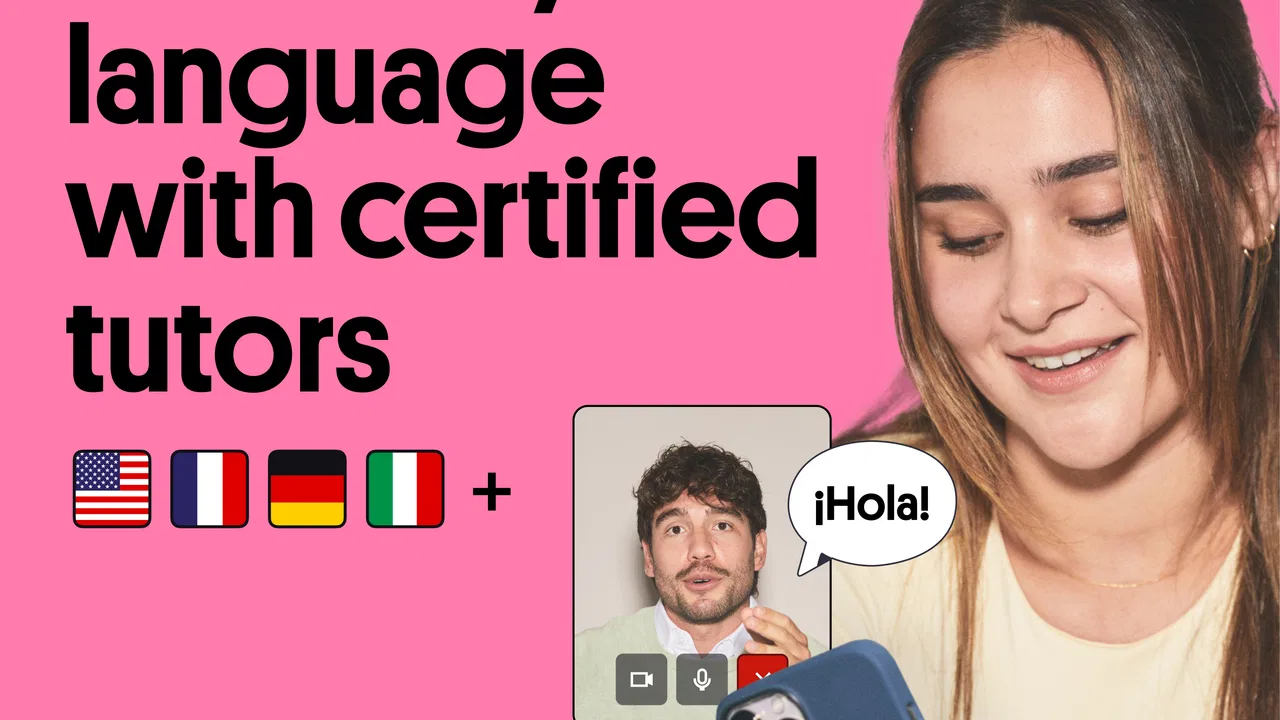
The central capability is simple but important: I can look for a tutor and use individual lessons to work on the language I actually need. That is very different from tapping through a fixed sequence where every learner sees the same exercise at the same time. With a tutor, the lesson can revolve around pronunciation, conversation, grammar, confidence, or a practical situation that is coming up in my life.
You May Also Like

 Blood Strike: 2.5 Anniversary
Blood Strike’s Loadouts Turn Every Drop Into a Tactical Gamble
A close look at Blood Strike’s custom loadouts: how fast access to signature weapons reshapes its battle royale rhythm, rewards preparation, and narrows the gap between fights.

 Pandora - Music & Podcasts
Pandora’s Music Is Easy to Start, but Harder to Recover
Pandora’s strength is its low-effort path from a seed to a station. Its weak spot is how much confidence it asks you to place in connection, setup, and quiet recovery.

 8 Ball Pool
 Is Built on Rivalries, Rematches, and Routine
A close look at the rivalries, rematches, shared routines, and unanswered safety questions that turn a quick pool match into a persistent mobile community.

 Samsung Music
’s Quiet Strength Is Playing What You Already Own
Its reach comes less from spectacle than from dependable access to a personal library. That simplicity is both the app’s strongest retention engine and its ceiling.

 AccuWeather: Weather Radar
AccuWeather Review: A Quick, Clear Forecast for Everyday Decisions
For everyday plans, the best forecast is the one you can understand quickly. AccuWeather makes rain timing, radar, and local conditions easy to act on, with a few trade-offs.

 Hill Climb Racing
Why Hill Climb Racing Still Turns Crashes Into One More Run
A tiny car, a bumpy hill and one more upgrade: Hill Climb Racing keeps resurfacing because its simple chaos makes every near-miss feel personal.
More From Our News Desk



This matters because language ability is uneven. I might understand written Spanish fairly well but freeze when someone speaks quickly. Another learner might know many Japanese words yet struggle to form a sentence. A private lesson exposes that imbalance much faster than a string of multiple-choice questions. The tutor can notice where I hesitate, ask a follow-up question, and adjust the conversation instead of waiting for an automated score to reveal the problem.
I also like that this approach gives the app a clear purpose. Preply is not trying to replace every language resource I use. It is most useful when I need guided human practice, especially speaking practice. The store summary mentions languages such as Chinese, Japanese, Dutch, and Spanish, and that range makes the service more appealing than an app built around only one popular language.
The strongest benefit is accountability. A lesson creates a real appointment rather than an intention I can quietly postpone. That does not magically make studying easy, but it changes the psychological cost of skipping practice. When I have prepared a few questions or a short topic before a lesson, I get more from the time than I would from opening a generic lesson while distracted.
The private lesson is most valuable when I use it to solve a specific communication problem, not when I expect the tutor to carry the entire learning process for me. That distinction shaped my opinion of the app. It can provide direction and feedback, but my progress still depends on showing up, practicing between sessions, and being willing to speak before I feel ready.
What using it in practice feels like
The practical workflow begins with choosing a tutor rather than selecting a purely automated course. That choice is more personal and therefore more important. I would pay attention to the language variety I want, the type of conversation I need, and whether the tutor seems comfortable correcting mistakes in a way I can accept. A friendly tutor is not automatically the right tutor for exam preparation, business communication, or absolute beginners.
My advice is to treat the first lesson as a test of fit. I would prepare a short explanation of my goal, such as handling travel conversations, speaking with relatives, or becoming less hesitant at work. I would also bring a few examples of what feels difficult. This gives the tutor something concrete to work with and makes it easier to judge whether the lesson is active and tailored rather than just casual conversation.
One useful workflow is to keep a small note on my phone during the week. I would write down phrases I wanted to say but could not, sentences I saw in the wild, and questions about grammar. Then I could use the next lesson as a live troubleshooting session. This is more efficient than asking a tutor to invent a topic from nothing, and it turns everyday confusion into lesson material.
Another good habit is to choose one narrow target for each session. Instead of saying “I want to improve everything,” I might focus on telling a story in the past tense, asking for clarification, or explaining my opinion without switching to English. A narrow target gives the tutor a clearer way to correct me and gives me a practical sign of progress after the lesson.
I would also ask for corrections in a format I can reuse. Immediate interruption can help with pronunciation, but it can also destroy the flow of a conversation. For fluency practice, I prefer letting the conversation continue and reviewing a few important errors afterward. For a pronunciation-focused session, more frequent correction may be worthwhile. The app creates the connection with the tutor; I still need to communicate how I learn best.
A realistic everyday use case
Imagine I am moving to the Netherlands and can read basic Dutch but avoid speaking. My problem is not a lack of isolated vocabulary. It is the uncomfortable gap between recognizing a sentence and producing one at the checkout, at work, or while arranging an appointment. I could schedule a lesson around those situations, role-play them with a tutor, and repeat the same exchange until the words become easier to access.
That scenario shows where Preply is stronger than a conventional flashcard routine. Flashcards can help me remember a word for “appointment,” but they do not force me to ask a follow-up question when I misunderstand the answer. A tutor can turn the word into a small conversation, notice that I am using an unnatural structure, and help me practice a more natural alternative.
The same approach works for a learner preparing for a family visit. I might want to talk about my job, explain my daily routine, or understand informal expressions used by relatives. A private tutor can simulate that pressure without making the situation feel like a public performance. For an advanced learner, the value may be less about learning basic vocabulary and more about sounding less translated.
There is also a useful option for people with irregular schedules. If my available study time changes from week to week, a tutor-based service can be more relevant than a course that expects a fixed daily rhythm. However, flexibility only helps if I am disciplined enough to arrange lessons and maintain a routine. Otherwise, the freedom can become another reason to delay.
Where it differs from ordinary language apps
Most familiar language apps are built around short, repeatable activities. They are convenient, inexpensive to use regularly, and excellent for creating a daily habit. I can open one while waiting for a bus and complete a small exercise without coordinating with another person. Preply offers a different kind of convenience: concentrated human attention rather than instant solo practice.
That difference means I would not automatically replace a vocabulary app with Preply. I would use automated exercises for quick repetition and private lessons for speaking, correction, and personalized direction. The combination can be stronger than either approach alone. The automated tool gives me material to review; the tutor reveals whether I can actually use it in a conversation.
Compared with a group class, private tutoring gives me more speaking time and less need to follow someone else’s pace. A group can be motivating and socially enjoyable, but a quiet learner may spend much of the session listening to other students. In a private lesson, my mistakes and interests are the lesson. The trade-off is that I lose the shared energy of classmates and may need to work harder to create conversation variety.
Compared with a traditional local tutor, the app is more convenient for discovering and arranging online lessons. That can be a major advantage for an uncommon language or a learner who cannot travel. On the other hand, an in-person class may suit someone who learns better from a physical classroom, wants a local community, or finds video lessons tiring. Preply is not a universal answer to every learning preference.
The trade-offs I would consider before committing
The biggest friction is the need to choose well. A private tutor can make learning feel remarkably personal, but the quality of the experience depends on the match between learner and teacher. I would not judge the whole service after one awkward conversation with a tutor whose style does not suit me. At the same time, I would not keep booking lessons out of politeness if the tutor ignores my goals or provides little correction.
There is also a difference between a pleasant conversation and an effective lesson. Talking with a patient native speaker may feel encouraging, but encouragement alone will not fix recurring grammar errors. I would look for a tutor who can balance natural conversation with clear feedback. If every lesson becomes casual chatting, I might enjoy the time without making the progress I expected.
Private tutoring also asks more from me emotionally. Speaking with a person can expose gaps that are easy to hide in an app full of correctable answers. That discomfort is part of the benefit, but beginners who feel anxious may need a gentle start. I would tell the tutor directly that I need slower speech, extra thinking time, or corrections after I finish a sentence. The right communication can make the first lessons much less intimidating.
Cost is another practical consideration, even though the app itself is free to download. The free entry point lets me explore the service, but private instruction is not the same as unlimited self-study. I would decide how often lessons fit my budget before building a plan around them. If regular one-to-one sessions are unrealistic, I might use occasional tutoring for direction while relying on free reading, listening, and speaking practice between lessons.
Technical convenience should not be confused with effortless learning. An online lesson requires a quiet enough place, a stable connection, and attention. If I am trying to study in a noisy commute, a short independent exercise may be a better choice. Preply works best when I can give the conversation proper focus rather than treating it as background audio.
Small strategies that make the lessons more useful
My first strategy would be to arrive with an output task. I might prepare a ninety-second explanation of my weekend, a mock phone call, or a description of a problem at work. The tutor can then correct the language I naturally choose, which is more revealing than completing isolated examples. Repeating the same task in a later lesson also gives me a practical way to notice improvement.
My second strategy would be to separate “must fix” errors from “interesting” errors. If the tutor corrects every detail, I may leave with a long list that I never review. I would ask for a short priority list: perhaps one pronunciation issue, one grammar pattern, and several useful phrases. That keeps the lesson connected to action instead of turning feedback into an overwhelming transcript.
A third strategy is to use the tutor as a guide for cultural context, but not treat one person’s speech as the only correct version. Languages vary by region, age, profession, and situation. If I am learning Spanish, for example, I would ask where a phrase sounds natural and where it might sound unusual. This helps me understand that “correct” and “appropriate for my situation” are related but not identical.
I would also reserve some lessons for assessment rather than constant new material. Every few weeks, I could ask the tutor to conduct a conversation without helping too quickly, then discuss the biggest recurring obstacles. This prevents me from mistaking familiarity with lesson topics for real flexibility. It also helps decide whether I need more pronunciation work, broader vocabulary, or better listening practice.
Who will gain the most from it
Preply is a strong fit for learners who already know why they want to speak a language and need a person to help them cross the gap between knowledge and use. It is especially suitable for people preparing for a trip, a move, a job situation, family conversations, or any event where spontaneous communication matters. It can also help intermediate learners who have become stuck studying alone.
It is less suitable for someone who wants a completely private, no-pressure experience with tiny sessions whenever motivation appears. A traditional self-study app will be easier for that person to open casually. I would also hesitate to recommend a tutor-centered approach to someone who has not yet decided which language or goal matters to them. Without a clear direction, the freedom to choose lessons may feel confusing rather than empowering.
Advanced learners should not assume that private tutoring automatically means advanced instruction. I would search for a tutor whose conversation style and correction method match my level. Someone who only wants relaxed speaking practice may prefer a different tutor from someone preparing formal presentations. The app can support both needs, but the learner has to make the distinction.
The current version is 6.113.1, and the app supports devices running at least iOS 9 or a comparable compatible mobile environment. It was released on September 10, 2018, and its Everyone age rating makes it approachable for a broad audience. Those details matter less than the lesson fit, but they reinforce the impression that this is an established education service rather than a short-lived experiment.
My final recommendation
I recommend Preply when the main obstacle is not recognizing words but using them with another person. Its private-tutor model gives language practice a human response, and that can expose problems that automated exercises leave hidden. I find it most convincing as a focused speaking and feedback tool, supported by independent study between lessons.
I would not choose it expecting instant fluency, a completely uniform course, or a substitute for personal effort. The experience can vary with the tutor, and the free download should not be mistaken for unlimited private instruction without a wider commitment. Still, if I were advising a friend who kept saying, “I understand the lessons, but I cannot speak,” this is one of the first apps I would suggest trying.
My honest view is that Preply earns its place when I use it deliberately: define a real communication goal, choose a tutor for that goal, bring everyday problems into the lesson, and review a small amount afterward. Used that way, it feels less like another language course and more like a practical bridge between studying and actually being understood.
FAQs for Preply: Language lessons
01What is Preply and how does it work?
Preply is an online platform that connects learners with language tutors from around the world. Users can search for tutors based on language, availability, and price range. Lessons are conducted via video calls, and students can schedule sessions at their convenience. The app provides a personalized learning experience tailored to individual goals.
02Is Preply suitable for beginners, and what languages are offered?
Yes, Preply is suitable for learners of all levels, including beginners. The platform offers a wide range of languages, including popular choices like Spanish, French, German, and Mandarin, as well as less commonly taught languages. Each tutor's profile indicates their teaching experience and whether they cater to beginners.
03How do I choose the right tutor on Preply?
Selecting the right tutor involves reviewing tutor profiles, which include their qualifications, teaching style, and student reviews. Users can also watch introductory videos and book trial lessons to determine if the tutor’s teaching approach aligns with their learning preferences. Filters help narrow down options based on language, price, and availability.
04What are the pricing and payment options on Preply?
Preply offers flexible pricing, with each tutor setting their own rates. Prices vary based on factors such as the tutor's experience and the language taught. Payment is made through the platform, ensuring secure transactions. Users can purchase individual lessons or packages, and Preply occasionally offers discounts and promotions.
05What should I do if I have technical issues during a lesson?
If you encounter technical issues during a lesson, Preply provides a support system to assist users. You can contact customer support through the app or website for immediate help. It's also recommended to check your internet connection and ensure your device meets the technical requirements for video calls.
Pros
- Wide variety of languages available.
- Flexible scheduling for lessons.
- Highly qualified tutors.
- User-friendly interface.
- Progress tracking features.
Cons
- Some tutors are quite expensive.
- Limited free content available.
- Booking system can be glitchy.
- Quality of tutors can vary.
- No offline mode available.

Preply: Language lessons
Gallery